HARDWARE KIT

ONE-PIX

The Hyperspectral Single Pixel Imaging kit: a hardware add-on that turns a spectrometer into a hyperspectral camera. An ideal environment for getting started with hyperspectral imaging, for teachers, students and fablabs.

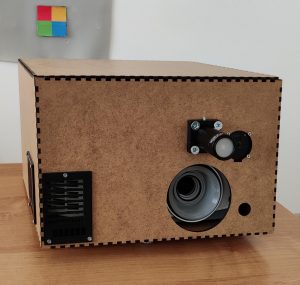
The ONE-PIX hyperspectral single pixel imaging kit: video projector, fibered spectrometer and Raspberry Pi board mounted in the laser-cut enclosure
THE KIT

What's inside the box

Every ONE-PIX kit ships assembled: a video projector and a fibered spectrometer with superimposed fields of view, both wired to a Raspberry Pi board that synchronizes pattern projection with each measurement. It’s housed in a laser-cut enclosure you can also build yourself from the files on GitHub.

HOW IT WORKS

How ONE-PIX works

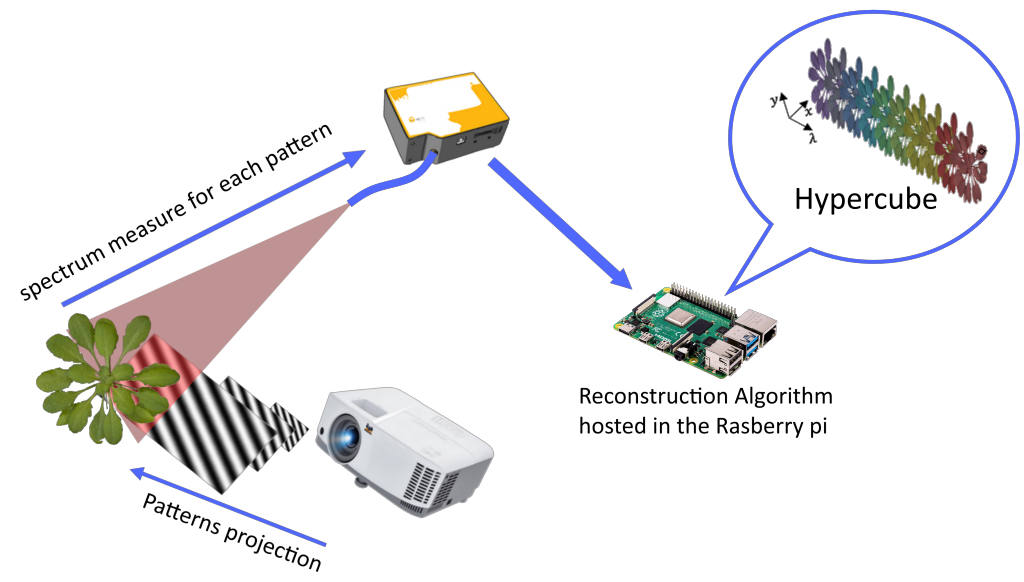
ONE-PIX technology involves projecting a series of patterns onto a scene to be imaged, then reconstructing the full spectral dataset from the measurements captured during acquisition.

Diagram of the ONE-PIX single pixel imaging working principle

Pattern projection

A series of patterns is projected onto the scene; a spectrometer measures the reflected spectrum for each one.

Spectral reconstruction

An algorithm rebuilds the complete spectral dataset from every spectrum measured during the acquisition.

Synchronized by Raspberry Pi

An onboard Raspberry Pi keeps pattern projection and spectrometer measurement in sync.

Built in any fablab

Laser-cut assembly, minimal wiring, no soldering. Hardware files are open on GitHub for a growing user community.

RESOURCES

Resources

Explore the ONE-PIX documentation, source code, data and research.

Technical specifications

400-700 / 400-800 nmSpectral range
0.6 nmSpectral resolution
2048Spectral bands
3.6 kgWeight
Standard ONE-PIX kitWith VIS/NIR option
TechnologyCompressive hyperspectral imaging (single-pixel imaging)Compressive hyperspectral imaging (single-pixel imaging)
Spectral range400 to 700 nm400 to 800 nm
Spectral resolution (mean)0.6 nm0.6 nm
Spectral bands20482048
Spectral SNR250:1250:1
Integration time10 µs to 65 s10 µs to 65 s
Digitisation16 bits16 bits
Working distance50 cm50 cm
Recommended projection size21 x 25 cm21 x 25 cm
Power consumption300 W max300 W max
ConnectorsRJ45 / Wi-FiRJ45 / Wi-Fi
Compatible spectrometersOcean Optics · Goyalab · Insion · AvantesOcean Optics · Goyalab · Insion · Avantes
Dimensions220 x 250 x 320 mm220 x 250 x 320 mm
Weight3.6 kg3.6 kg

Community contributions

Cooperation drives the ONE-PIX community forward. These contributions from our members show how the kit is used in their own projects.

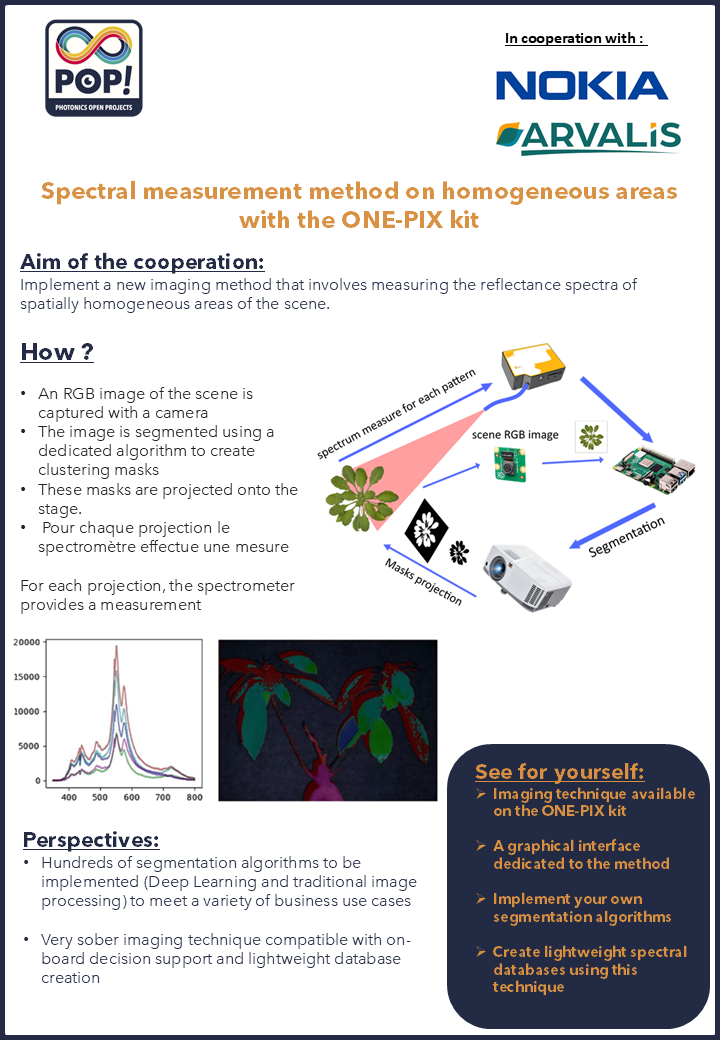
Spectral measurement method on homogeneous areas with the ONE-PIX kit
NOKIA / ARVALIS

Spectral measurement method on homogeneous areas with the ONE-PIX kit

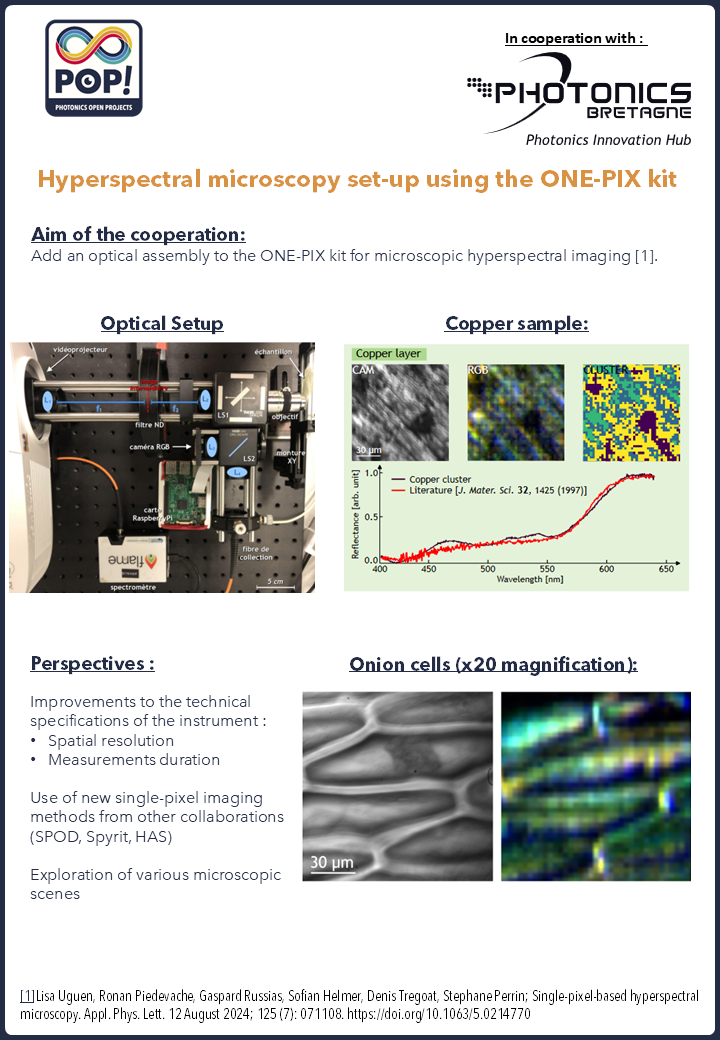
Hyperspectral microscopy set-up using the ONE-PIX kit
Photonics Bretagne

Hyperspectral microscopy set-up using the ONE-PIX kit

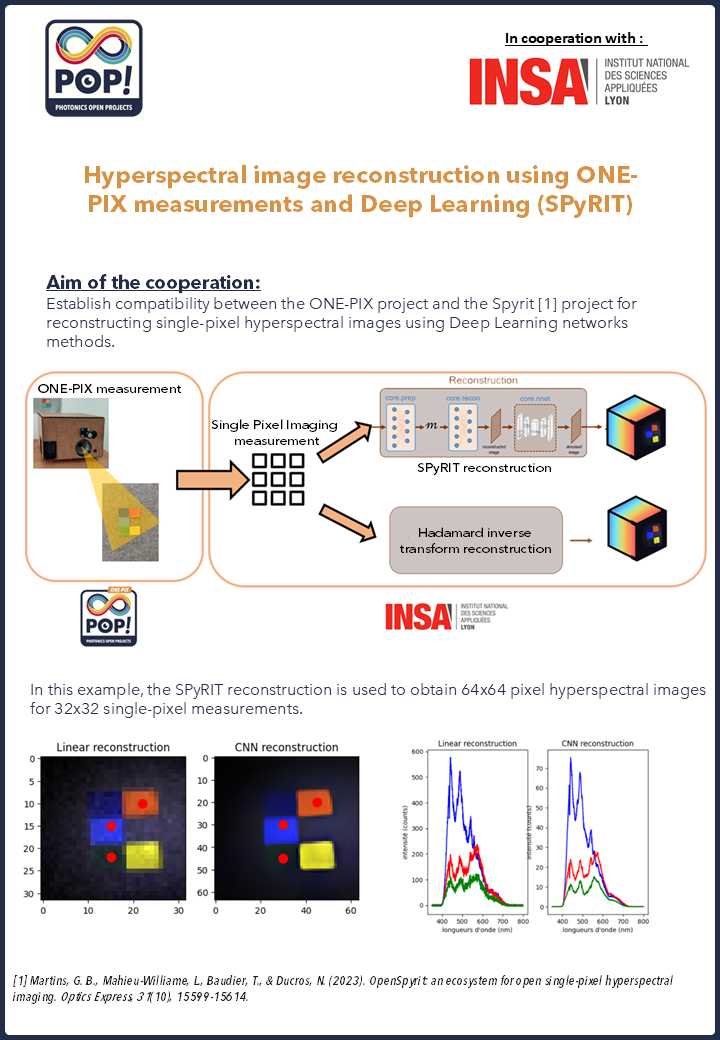
Hyperspectral image reconstruction using ONE-PIX measurements and Deep Learning (SPyRIT)
INSA Lyon (CREATIS)

Hyperspectral image reconstruction using ONE-PIX measurements and Deep Learning (SPyRIT)

Single pixel object detection (SPOD) with the ONE-PIX kit
IETR Lannion

Single pixel object detection (SPOD) with the ONE-PIX kit

Frequently asked questions

The recommended distances of use for macroscopic scenes are between 50 cm and 1 m. The optical flux reflected by the scene decreases in proportion to the square of this distance, so measurement distance should be optimised depending on scene reflectivity to guarantee data quality and limit acquisition times.
By design, the ONE-PIX kit is optimised for the visible spectral range, 400 to 700 nm. It is possible to adapt the instrument optics to extend the spectral range to 800 nm. These parameters also depend on the specifications of the spectrometer used.
Acquisition time is proportional to the spectrometer integration time, the number of repetitions per projection, and the number of structured pattern projections. In real field conditions, the PRO-PIX sensor achieves a compression ratio of 25 percent for professional scenes with no prior knowledge, and below 1 percent with a custom algorithm.
At present, the ONE-PIX kit measures in the visible and near infrared regions. The industrial version, PRO-PIX, measures over a wider spectral range covering UV, VIS and SWIR.
ONE-PIX is a very good lab and teaching tool. It is affordable compared with other spectral cameras, reconfigurable in hardware and software to avoid significant additional costs for future adaptations, and it gives access to a growing community of users and researchers.
To adapt a spectrometer in the ONE-PIX kit, it must be controllable via Python. Depending on your needs, measurement speed or quality should guide which spectrometer to select. Photonics Open Projects is happy to help with these questions.

Configure your ONE-PIX

Configuration
Quantity
Estimated total Price on request

Vision as a common